The most spectacular natural light show of the year is already underway — and 2026 is shaping up to be the best one in years. Here's everything you need to know about the Perseid meteor shower and where to head for the best views in and around London.
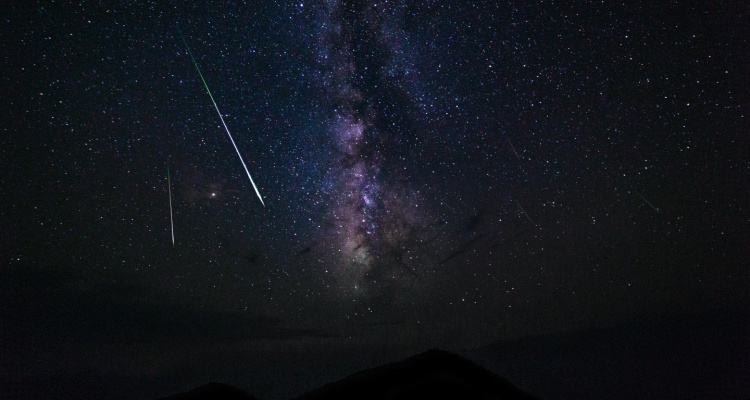
Perseid Meteor Shower, pictured by Austin Human in Death Valley.
What Is The Perseid Meteor Shower?
Every summer, Earth passes through a trail of debris left behind by Comet 109P/Swift-Tuttle — and the result is one of the most dazzling natural displays you'll ever see. Meteor showers occur when the Earth passes through the debris of a comet, and the dust and gas left behind burns up in the atmosphere, causing shooting stars. Those shooting stars? That's the Perseid meteor shower.
The Perseids get their name because they appear to radiate from the constellation Perseus — though don't worry about finding it in the sky. The meteors can appear absolutely anywhere overhead, which means you don't need to be an astronomer to enjoy the show.
Why Is It Such A Big Deal?
The Perseid meteor shower is one of the best meteor showers of the year because it produces bright meteors and is one of the most active. There's also a high chance of seeing fireballs — very bright meteors — as well as meteors with long trains. At its peak, the Perseid shower can feature more than 100 meteors per hour, including bright streaks and fireballs.
The Perseids are the meteor shower most people in Britain actually stay up for. They arrive on warm August nights rather than the bitter cold of the winter showers, they are reliably rich, and they streak across the sky fast and bright.
Why Is 2026 Especially Good?
Here's the thing: 2026 is genuinely exceptional. The peak lands on a night when the Moon has all but vanished, leaving the darkest Perseid skies the UK has seen in years. The New Moon falls on 12th August — the same day as the peak — meaning the Moon is effectively absent from the night sky, and there is no moonlight to drown the fainter meteors. That means you can catch not only the dazzling fireballs but the steady drizzle of dimmer streaks that a moonlit sky would erase entirely.
Oh, and there's a bonus: on the same day — 12th August 2026 — the UK will witness its best solar eclipse since 1999. British observers will see a deep partial solar eclipse with over 90% of the Sun obscured, with London seeing 91% obscured, beginning at 18.17 BST. So you can watch the eclipse in the evening, then stay up for the meteors. Not a bad Tuesday night.
When Is The Perseid Meteor Shower 2026?
The Perseid meteor shower is active between 17th July and 24th August 2026. So technically, it's already happening right now — you might catch an early Perseid on any clear night between now and late August.
That said, there's a low hourly rate for much of this period, only showing noticeable enhancement between 9th/10th and 15th/16th August. The best dates to see the Perseid meteor shower are on the nights that span from 11th to 12th August and 12th to 13th August, as these dates produce the best rates. 12th to 13th August is the peak night, with up to 150 meteors an hour predicted.
What Time Should I Go Out?
Meteor rates climb steeply as the shower's radiant — the point the meteors appear to stream from — rises higher in the sky. Before midnight the radiant sits low, so many meteors are lost below the horizon. After midnight it climbs, and the number you can see roughly doubles.
The best time to see the Perseids is between midnight and 4am. Set your alarm, grab a blanket, and make a night of it.
Has The Perseid Meteor Shower Been Spotted In London Yet?
The shower has been active since 17th July, but there are yet to be many (if any) confirmed sightings. Early-season meteors tend to be fewer and fainter than peak-night fireballs, but they could be visible from higher ground and open green spaces away from the worst of the city's light pollution.
Some Perseids can be very bright, though, so it's worth looking out for them — even from light-polluted areas — if you get the chance.
Where To See The Perseid Meteor Shower In London
Let's be honest: London is not exactly famous for its dark skies. But that doesn't mean you're out of luck. You can look out for the Perseids wherever you are, but there are certain kinds of places that will increase your chances of spotting meteors. Here are the best spots in and around the capital.
Hampstead Heath, North London
One of the most popular stargazing spots in the city, and for good reason. Sitting atop one of central London's highest points, Hampstead Observatory was founded in 1899 and the surrounding Heath offers wide open skies away from the worst of the streetlight glare. Head to Parliament Hill for an unobstructed view to the south, or find a quiet corner of the Heath away from the ponds for a more secluded spot. Face away from the city centre to reduce light pollution in your field of view.
Richmond Park, South West London
One of London's largest Royal Parks and consistently recommended as one of the capital's better stargazing spots. The sheer size of the park means you can get genuinely far from road lighting, and the open grassland gives you a wide, unobstructed view of the sky. Aim for the Isabella Plantation area or the open grassland near Pen Ponds for the darkest conditions.
Regent's Park, Central London
Surprisingly decent for central London, particularly the open spaces around the Inner Circle. The park's size and the relative lack of tall buildings means you get a reasonable sweep of sky. It's not the darkest spot on this list, but it's accessible and a lovely setting for a late-night meteor watch.
Epping Forest, East London / Essex Border
Epping Forest is one of the recommended dark sky spots for London stargazers, and it's easy to see why. Stretching across 6,000 acres on the edge of the city, it's significantly darker than anywhere inside the M25. Take the Central line to Epping and walk into the forest — the further from the road, the better.
Walthamstow Wetlands, North East London
A surprisingly good shout for east Londoners. The vast open water and wetland reserve means minimal artificial light bouncing around, and the flat, open landscape gives you a clear view of the sky in all directions. It's free to enter and a genuinely atmospheric spot for a late-night outing.
Blythe Hill Fields, South East London
A lesser-known gem in Lewisham, Blythe Hill Fields sits on an elevated ridge with panoramic views across the city. Face north-east towards Perseus and you've got a decent shot at catching some early-evening Perseids before the radiant climbs higher after midnight.
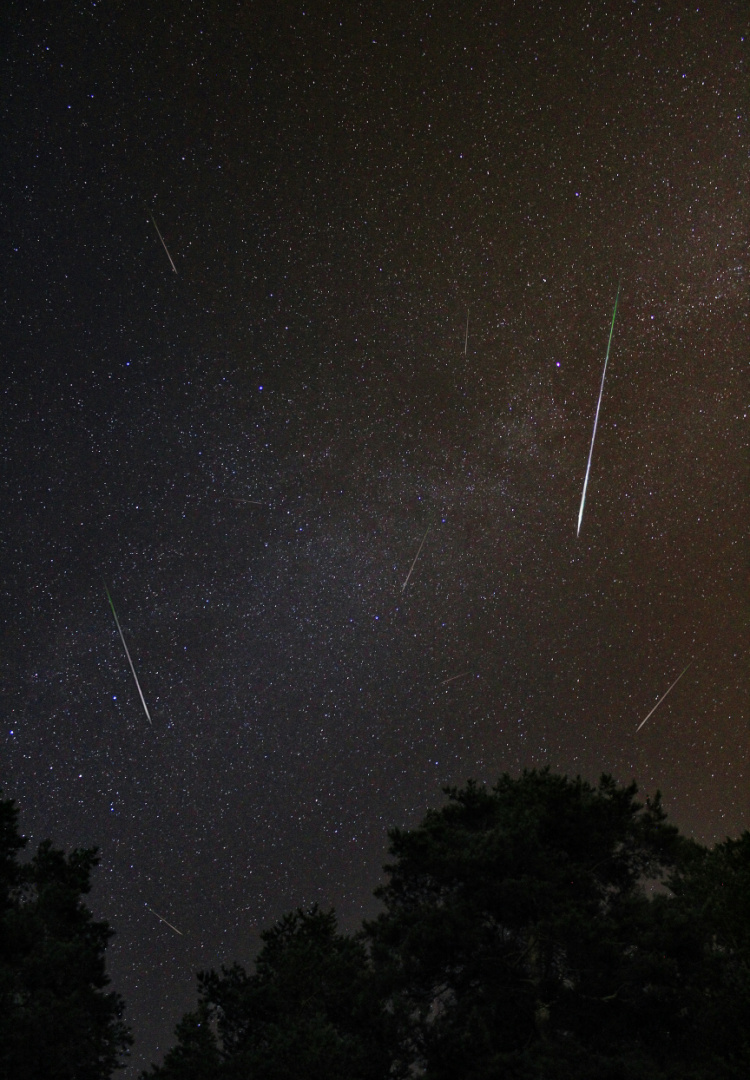
Perseid Meteor Shower, captured by Prokhor Minin in Russia.
Near London: The Best Dark Sky Spots Within Reach
If you're serious about the shower and willing to travel, these spots within a couple of hours of London will give you dramatically better views.
South Downs National Park, Sussex (approx. 1 hour from London)
The South Downs became an International Dark Sky Reserve in 2016 — remarkable given its proximity to London and Brighton. It's the most accessible dark sky site for Londoners. Rolling across Southeast England, the chalk hills and lowland heath of the South Downs offer phenomenal stargazing just 50 miles from London. Head to the Devil's Dyke area near Brighton or the open downland around Ditchling Beacon for some of the darkest skies within easy reach of the capital.
Ashdown Forest, East Sussex (approx. 1 hour from London)
The inspiration for A.A. Milne's Hundred Acre Wood is also one of the darkest spots in the South East. The open heathland means wide, unobstructed skies, and the lack of major towns nearby keeps light pollution low. A brilliant option for a Perseid road trip.
Dunstable Downs, Bedfordshire (approx. 45 minutes from London)
Part of the Chilterns Area of Outstanding Natural Beauty, Dunstable Downs is a National Trust site with sweeping views and relatively dark skies for somewhere so close to the capital. It's a popular spot with London-based stargazers and easy to reach by car.
Tips For Watching The Perseids In London
Getting the most out of a meteor watch in a light-polluted city takes a bit of planning. Here's what the experts recommend:
- Give your eyes time to adjust. Give your eyes at least 15 minutes to adjust to the dark so that you can catch more of the fainter meteors — this does mean that you should avoid looking at your phone.
- Face away from the city. Reduce the amount of light pollution in your field of view. This could mean heading out to the countryside, a nearby park or even turning your back to street lamps if you're not able to go anywhere.
- Don't bother with binoculars. Binoculars and telescopes are not necessary as they will restrict the size of the sky that will be visible to you. The naked eye is all you need.
- Look at the whole sky. Even though the radiant of the Perseids comes from the constellation Perseus, you can look at the whole sky, though it may be helpful to stand facing northeast towards Perseus.
- Lie back. Get yourself a blanket or a camping chair and lie flat — you'll see far more sky and your neck will thank you.
- Check the weather. Plan ahead and check the weather forecast. If it is likely to be inclement, find a different location or go out on a different day.
- The nights before the peak count too. The days leading up to the peak are usually better than the days after. So if the 12th looks cloudy, try the 11th.
Perseid Meteor Shower 2026: FAQs
When does the Perseid meteor shower peak in 2026?
The Perseids peak overnight from 12th to 13th August 2026, with the richest rates expected in the early hours of the 13th, roughly between 1am and dawn.
How many meteors will I see?
Rates of 50–100 per hour are realistic from a dark sky site, or up to 150 at the shower's peak. From a London park, expect fewer — but the brightest fireballs will still be visible even through the city's light pollution.
Do I need a telescope?
Absolutely not. The Perseids are a naked-eye event, and optical aids only narrow your view. Simply find a dark, open spot, let your eyes adjust for 20 to 30 minutes, and take in as much of the sky as you can.
Where should I look in the sky?
Even though the radiant of the Perseids comes from the constellation Perseus, you can look at the whole sky, though it may be helpful to stand facing northeast towards Perseus. Use a free app like SkyView or Star Walk to locate Perseus if you're not sure where to look.
Why is 2026 a particularly good year for the Perseids?
The New Moon falls on 12th August, the very day of the peak. With the Moon sitting between the Earth and the Sun, it is effectively absent from the night sky, and there is no moonlight to drown the fainter meteors. This makes 2026 one of the best Perseid years of the decade.
Can I see the Perseids from Central London?
You can, but you'll see far fewer than from a darker spot. Observers at a suburban site could potentially see a rate of about 25 Perseids an hour or between dawn and 5am on the night of the peak. Head to one of the parks listed above for your best chance.
Is the Perseid shower active right now?
Yes. The Perseid meteor shower is active between 17th July and 24th August, with the number of meteors increasing every night until it reaches a peak on the night of the 12th to the 13th August 2026, after which it will tail off. You might catch an early one on any clear night between now and the peak.
What's the best thing to bring?
A blanket, camping mat or picnic mat, a red-light torch (to preserve your night vision), warm layers even in August, and something to drink. Make a night of it.
If you're looking to see that deep partial solar eclipse on 12th August 2026 (starting 18.17 BST), this list of rooftop bars in London pairs views with drinks.


